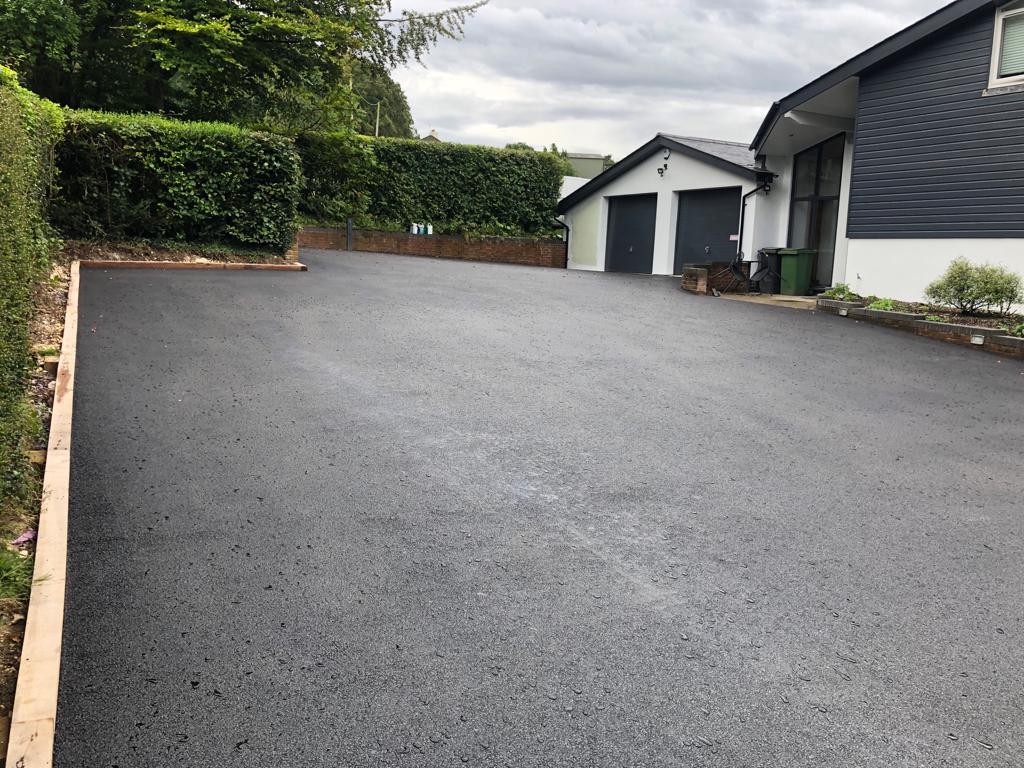
High-traffic surfaces must withstand repeated vehicle movements, concentrated wheel loads, braking and turning without deteriorating prematurely. Asphalt is widely used for access roads, commercial yards, car parks and other frequently used areas because it combines load-bearing performance with a smooth, continuous finish.
Its reliability, however, depends on more than the visible asphalt layer. Ground conditions, pavement design, drainage, material quality and compaction all influence how well the completed surface performs.
Why Asphalt Performs Well Under Frequent Vehicle Traffic
It Distributes Vehicle Loads Through Several Layers
An asphalt pavement is constructed as a layered system. The surface transfers vehicle loads through the asphalt and into the supporting base rather than allowing pressure to remain concentrated at wheel contact points.
Each layer has a specific role. The asphalt provides a durable running surface, while the base spreads loads and supports the pavement above. When these layers are designed for the expected traffic, the surface can accommodate regular use without excessive movement.
Asphalt Has a Degree of Flexibility
Asphalt is often described as a flexible pavement because it can accommodate limited movement without behaving like a rigid slab. This flexibility helps the surface respond to traffic loads and minor changes within the supporting ground.
The pavement still requires a stable foundation. Excessive movement beneath the asphalt can eventually cause cracking, rutting or deformation. Flexibility improves performance but cannot compensate for inadequate preparation.
A Continuous Surface Reduces Weak Points
Correctly laid asphalt creates a largely continuous surface with fewer individual joints than modular paving. This helps distribute vehicle movements evenly and provides a smooth route for cars, delivery vehicles and site equipment.
A continuous finish also avoids loose surface units shifting under turning wheels. Joints remain important around separate laying sections, edges and repairs, so these areas must be properly prepared and compacted.
It Can Be Designed for Different Traffic Demands
Not every high-traffic area carries the same loads. A frequently used domestic driveway experiences different stresses from an access road serving commercial vehicles.
The pavement structure can be tailored by considering:
- Expected vehicle types and weights
- Frequency of use
- Turning and braking movements
- Stationary loading areas
- Existing ground conditions
- Required drainage
- The intended function of the surface
This allows the base construction, asphalt depth and material specification to reflect how the area will actually be used.
Proper Ground Preparation Creates Stability
The performance of asphalt depends heavily on what lies underneath it. Soft soil, poorly compacted fill or unsuitable material can move under traffic and cause the surface to sink.
Preparation may involve excavating weak material, shaping the formation and constructing a well-compacted base. Each layer must be placed evenly so the asphalt receives consistent support across the entire area.
A strong surface over an unstable foundation will still fail. Ground preparation is therefore one of the most important parts of asphalt installation.
Compaction Produces a Dense Surface
Asphalt must be compacted at the correct stage of installation to achieve suitable density. Effective compaction reduces air voids, improves aggregate interlock and helps the material resist deformation.
Insufficiently compacted asphalt may allow moisture to enter or begin moving under regular traffic. Uneven compaction can also create variations in surface performance, with weaker sections deteriorating earlier than the rest.
It Provides a Smooth Running Surface
A well-laid asphalt surface supports comfortable and predictable vehicle movement. The lack of abrupt joints or loose aggregate can benefit frequently used entrances, circulation routes and parking areas.
Smoothness also helps prevent water from collecting in small depressions, provided the surface has been constructed to the correct levels. Accurate grading remains essential because even a durable material can deteriorate if water is allowed to stand repeatedly.
Asphalt Can Resist Turning and Braking Forces
High-traffic areas often experience their greatest stress where vehicles stop, accelerate or turn. These movements apply horizontal forces that can push or distort a poorly constructed surface.
A suitable asphalt mix, stable base and thorough compaction help the pavement resist these forces. Areas with concentrated turning movements may require particular attention during design and installation.
Effective Drainage Protects the Pavement
Water can weaken the material beneath an asphalt surface if it enters through cracks, joints or poorly finished edges. Once the base becomes saturated, traffic may cause movement that appears as sinking, cracking or potholes.
The surface should be laid to defined levels that guide rainfall towards appropriate drainage points. Edges, channels and adjoining surfaces must also be coordinated so water does not remain trapped beside or beneath the asphalt.
Strong Edges Help Prevent Surface Breakdown
Asphalt edges are vulnerable if they lack adequate support. Repeated vehicle loads near an unsupported boundary can cause cracking and crumbling that gradually spread into the main surface.
Properly formed edge restraints or shoulders help contain the pavement and support traffic movements. They are particularly important where vehicles regularly pass close to lawns, verges or unpaved ground.
Localised Damage Can Often Be Repaired
Although asphalt is durable, damage can still develop because of water ingress, excessive loading or underlying base movement. One practical advantage is that affected sections can often be cut out and reinstated.
A successful repair must extend beyond loose surface material and address the reason for failure. If the base has weakened, replacing only the asphalt layer is unlikely to prevent the damage from returning.
Routine Maintenance Supports Long-Term Performance
Regular inspections can identify cracks, edge deterioration, drainage problems and small surface defects before they spread. Timely maintenance helps prevent water from reaching the supporting layers and keeps the pavement functioning as designed.
Areas exposed to frequent turning, braking or heavy stationary loads deserve particular attention because deterioration may develop there first.
Why Professional Installation Matters
Reliable asphalt surfacing requires coordination between ground preparation, base construction, drainage, material selection, laying and compaction. Weakness in any one of these stages can affect the performance of the entire pavement.
Professional assessment allows the surface to be designed around actual traffic levels and site conditions. This creates a more dependable result than applying a standard construction method to every location.
Conclusion
Asphalt is a reliable option for high-traffic areas because it provides a smooth, continuous and adaptable pavement capable of distributing frequent vehicle loads. Its performance depends on a stable base, suitable asphalt specification, thorough compaction, secure edges and effective drainage.
Ballarat Road Tech provides professional asphalt surfacing in Ballarat, VIC, Australia. If you are planning a frequently used access road, parking area or commercial surface, contact the team to discuss a solution suited to the site and expected traffic.
Call us on: 03 4159 2883
Click here to find out more about Ballarat Road Tech
Click here to complete our contact form and see how we can help with your road needs.